
What Is a WDO Inspection? A Guide for Southern California Homeowners

A WDO inspection is a professional check of a home for wood-destroying organisms, the pests and fungi that damage the wood a house is built from. In California it is a specific, licensed inspection that looks for termites, wood-boring beetles, carpenter ants and bees, and fungal decay such as dry rot, along with the conditions that invite them, like earth-to-wood contact and excessive moisture. It is a different thing from a general home inspection, and it covers more than termites, even though termites are usually the main concern.
At CVA Exterminators, we have performed WDO inspections and reports for California real estate since 1998, licensed by the California Structural Pest Control Board (Registration #PR4456). Two things trip up buyers and sellers here more than anything else: when the inspection is actually required in California, and what a report with no findings really means. Both have a specific answer, and getting either one wrong can cost you money or a closing date.
What does a WDO inspection look for?
A WDO inspection looks for wood-destroying organisms, which is a broader category than termites alone. "WDO" covers any living thing that damages structural wood, so the inspector checks for several kinds of pests and for fungal decay. Termites are the biggest concern in Southern California, but they are not the only one.
If you have bought a home in another state, you may have been given a WDI inspection instead. WDI stands for wood-destroying insects, and that scope stops at insects: termites, beetles, and the like. California's inspection covers any organism that destroys wood, fungal decay included, so the scope is wider here.
Here are the organisms a California WDO inspection can cover:
| Wood-destroying organism | What it is | What the inspector looks for |
|---|---|---|
| Subterranean termites | The most damaging termite group in California, nesting in soil and traveling to wood | Mud tubes running from soil to wood, damaged wood, live or dead insects, and conditions that can hide activity, such as soil sitting high against a stucco wall |
| Drywood termites | Common along the coast and inland, living inside the wood they feed on | Small "kickout" holes, fecal pellets, shed wings, and wood that sounds hollow when tapped, since drywood termites often feed right up to the paint |
| Wood-boring beetles | Beetles such as powderpost beetles, whose larvae tunnel through wood as they develop | Round exit holes and fine, powdery frass |
| Carpenter ants and bees | Insects that hollow out or bore into wood rather than eating it | Galleries in wood, sawdust, and activity around damaged or damp areas |
| Fungal decay (dry rot) | Fungus that breaks down wood in the presence of moisture | Wood that looks shriveled, crumbling, or discolored and feels soft when lightly probed, plus the moisture conditions behind it |
Fungal decay is the reason a WDO inspection is broader than a plain termite inspection. It covers organisms that eat or damage wood plus the moisture problems that let fungus take hold. You can read more about the termites specifically in the University of California's statewide guide to termites in the home and landscape.
How is a WDO inspection different from a home inspection?

A home inspection and a WDO inspection answer different questions, and buyers often assume one covers the other. A general home inspection looks broadly at the house: the roof, plumbing, electrical, heating and cooling, and the major systems and components. A WDO inspection is narrower. It focuses on wood-destroying organisms, the damage they cause, and the building conditions that make an infestation more likely.
The two do overlap in one place. Plumbing leaks, roof leaks, faulty grade conditions, and other moisture problems can appear on a WDO report as well, not because the inspector is evaluating your plumbing or your roof, but because those conditions are exactly what invites wood-destroying organisms in.
In California the WDO inspection is also a regulated, licensed inspection rather than one more line item on a home inspector's checklist. State law says an opinion about whether a home has wood-destroying organisms has to come from a licensed inspector working for a registered structural pest control company. That standard is set out in the state's Structural Pest Control Act. A home inspector is not qualified to issue that opinion, though a good one will often flag a condition that concerns them and recommend you bring in a licensed WDO inspector to look at it.
What happens during a WDO inspection?

A WDO inspection is a careful visual examination of the parts of the home that can be reached. The inspector goes through the accessible areas where wood-destroying organisms tend to show up: the substructure and foundation, crawl spaces, the attic and roof framing, eaves and exposed wood, porches, steps, and interior areas where evidence might appear.
The inspector documents two things. The first is evidence of an actual problem, such as mud tubes, exit holes, frass, staining, live or dead insects, and visible wood damage. The second is conditions that invite a problem even when nothing is active yet, such as leaks, poor ventilation, excess moisture, and wood in direct contact with soil. Suspicious wood may be gently probed or tapped to check whether it is sound underneath.
A WDO inspection only covers what the inspector can see and reach. Some areas are inaccessible in nearly every home: behind drywall, the space between floors, and anything concealed by carpeting, appliances, furniture, or stored belongings. Those are typically covered in the notes and disclaimers on the report.
An area that would normally be accessible is handled differently. A locked room, or a garage packed wall to wall with storage, gets its own finding, with a recommendation that it be cleared or opened so it can be inspected. If a certification is needed for a sale, that item has to be taken care of before you can get one. It is a good reason for sellers to clear access before the inspector arrives rather than after, since a return visit means another inspection and another fee.
What is the difference between a limited and a full WDO inspection?
The difference comes down to how much of the home is inspected. California recognizes two kinds of original reports, and the plain-English names people use ("spot" and "full") line up with them closely.
| Detail | Limited (spot) inspection | Complete (full) inspection |
|---|---|---|
| What it covers | Only the specific area of concern, plus portions of the home nearby | All visible and accessible portions of the structure |
| Common use | Checking a spot where you noticed something | A home sale, purchase, or refinance |
| Cost at CVA | Free | From $125 (pricing subject to change) |
| Recommends a full inspection? | Yes, by law it must | Not applicable; it already covers the whole accessible structure |
| Fits a real estate transaction? | No, it speaks only to the area described | Yes, it addresses the whole accessible home |
A limited inspection is a good option when you have spotted something specific and want a professional to look. It is not a substitute for having the whole home inspected, and California rules actually require a limited report to recommend a full inspection of the entire structure. For a real estate transaction, where the question is the condition of the whole accessible home, the complete inspection is the one that fits. You can learn more on our WDO inspections page.
Other reports you may see
Original reports are not the only kind. Three others can follow once an inspection has been done:
A reinspection report covers an item from the original report that has since been looked at again, often because the owner or their own contractor completed the work rather than the pest company. One is issued every time the inspector returns, and it records the outcome either way, whether the item passed or did not. Work that does not meet the original inspector's requirements will not pass, and no certification follows from it, so it is worth asking what those requirements are before the work starts rather than after.
A supplemental report adds findings or recommendations to an original report. If an area was inaccessible and a further inspection later turns something up, the new findings go on a supplemental report. If the further inspection turns up nothing, a reinspection report is issued instead.
A corrected report fixes something on an original report, whether that is an error in the findings and recommendations or a detail like the city, the ZIP code, or the name of a party to the transaction. It is marked by a check box on the front page.
Each return visit carries its own inspection fee, though often a reduced one. The state charges a filing fee on every report a company submits, and that is where reinspection fees come from. It is one more reason to get access opened up and the work specified correctly the first time.
What does the WDO report say, and what is a clearance?
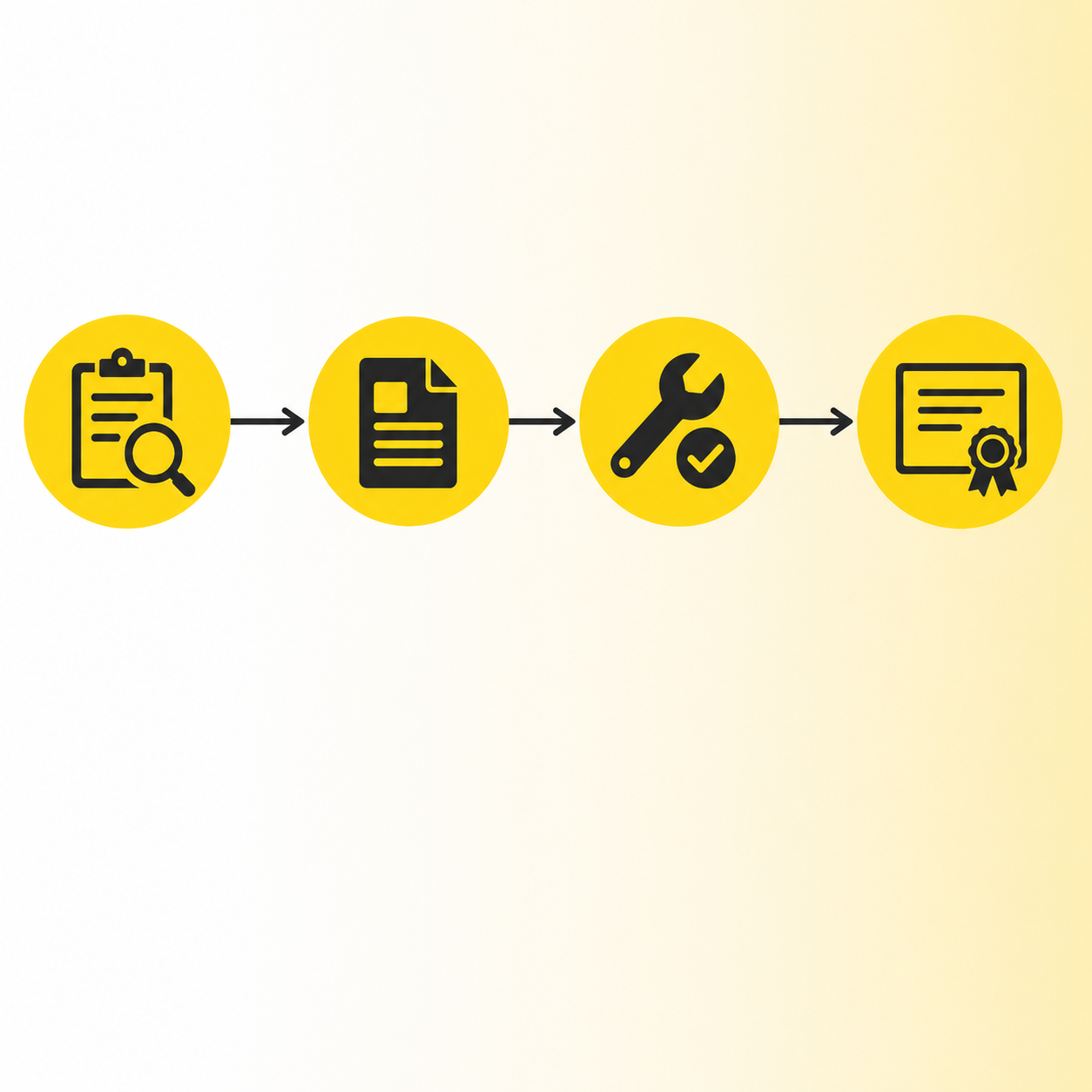
A WDO report records what the inspector found and where. California's current state form organizes findings by type: subterranean termites, drywood termites, fungus and dry rot, other findings, and further inspection. An older format organized everything area by area instead, by subarea, attic, garage, interior, and exterior, and some companies still use it. We use the current format.
If the inspection turns up nothing, the report does not announce that nothing was found. It simply comes back with no findings and no recommendations on it. That is all it means, and it is important not to read more into it than that.
California reports sort findings into two groups. Section 1 covers evidence of an active problem: visible evidence of an infestation or infection, or damage that resulted from one. Inspectors deal in evidence rather than certainty here, since there is no simple way to tell whether the organisms that left the evidence behind are still there, so most companies treat evidence of a problem as active. Section 2 covers conditions that could lead to a problem later, like a moisture issue or wood touching soil, where the inspector found no active infestation. A Section 2 condition is not the same as a Section 1 finding. Areas the inspector could not reach are listed separately as needing further inspection.
That is also why, if you have had termite work done before, it is worth calling back the company that did it. A company that treats an area is expected to clean up the evidence afterward, so an inspector from somewhere else has no way to tell old activity from new. On top of that, no pest control company will certify work performed by another company. If you had work done and you are now selling, bringing back the original company is the cleaner path.
A report with no findings is not a clearance. In California, what people in real estate call a clearance is formally a certification, and it is a written statement added to a document rather than a document of its own. It can appear in three places: an original report with no Section 1 findings, a reinspection report where the work was completed to the WDO inspector's satisfaction, or a Notice of Work Completed and Not Completed, often shortened to a Completion, issued after the pest company has done the work itself. The wording changes depending on which document carries it, and lenders, escrow officers, and agents know what to look for. What you will not find anywhere is a line stating that the home is certified. The free limited inspection does not produce a certification at all.
No law requires a homeowner to repair what a report lists. The requirement comes from the buyer or the loan underwriter asking for a certification, and a standard certification calls for every Section 1 item to be completed, along with inspection or correction of the further inspection items where that is possible. Section 2 conditions do not have to be completed for one. The VA has at times asked for both sections to be completed with specific VA wording added to the certification, so it is worth settling that expectation early rather than at closing.
If a report does find active termites or other wood-destroying organisms, the next step is whatever the report recommends, which may be termite treatment, repair of the damaged wood, or both. Treatment and repair can appear as separate findings or as a single finding carrying more than one recommendation. Treatment is aimed at controlling the problem rather than promising it will never return. For buyers weighing what to do when a report shows findings, our article on whether to buy a home without a termite certification walks through the decision.
What separates a specific report from a vague one
Not every report is written to the same standard, and the difference shows up the moment someone has to act on it.
A finding should tell you what was found and exactly where. A finding written as "fungus infection and damage noted at areas marked on the diagram," followed by eight marks on a flat overhead drawing, leaves you guessing. Are those areas outside, in the attic, in the subarea, inside the house? Is the affected piece a rafter, a joist, an eave board, a post, or stucco molding? A specific finding names it: "fungus infection at the rafter tails," then "fungus damage to the patio post." Anyone reading it, including a contractor you hire later, should be able to walk up to the exact piece of wood.
Recommendations deserve the same test. "Repair, remove and replace, or wood fill the damage as necessary" describes three different jobs at three different prices. If a company quotes a number without saying which one it intends to do, you have no way to know what you paid for. Most of the time an experienced inspector can look at the damage and say which repair fits. When an area has to be opened up before that call can be made, the recommendation should say so. And occasionally the work itself turns up damage nobody could see beforehand, in which case a supplemental report is filed with the additional findings, recommendations, and cost.
If a report you receive reads vaguely, ask the company to be specific before you sign anything or hand it to your lender.
Do you need an NPMA-33 form?
Some lenders, especially for VA and FHA loans, ask for a federal form called the NPMA-33. In California, that form cannot stand in for the state's own WDO report. The licensed inspector prepares the California report on the state form, and nothing stops a California company from attaching an NPMA-33 to it. It does not happen automatically. Ask for it when you order the inspection, and expect it to add something to the cost.
In practice, lenders based in California, or familiar with California, rarely ask for one. The request usually comes from a smaller out-of-state online lender that does not realize the state has its own system. When that happens, we can send over a state informational document that explains it, and the lender will generally accept the California report on its own, since it is the more comprehensive of the two.
When is a WDO inspection required in California?

In California, a WDO inspection is not automatically required to buy or sell a home. It becomes required in one of two ways: your purchase contract calls for one, or your lender makes it a condition of financing. Today most California buyers arrange a WDO inspection the same way they arrange a general home inspection, as a step they choose during the process.
The California Structural Pest Control Board notes that most lending institutions ask for a WDO inspection before they finance a home, even though state law does not require one in every sale. The requirement itself usually comes from the loan. The obligation to hand the report to the buyer before a sale closes is set in California Civil Code Section 1099, which applies when the report is a condition of the contract or the financing.
Because loan rules drive most of this, they are worth taking one at a time. Everything below describes California specifically; requirements differ in other states.
VA loans
VA loans are the clearest case. Current VA guidance requires wood-destroying-insect information for the entire state of California, which you can confirm on the VA's own local requirements page. If you are buying with a VA loan anywhere in Southern California, plan on a WDO inspection as part of the process.
FHA loans
FHA loans are more conditional than VA loans. On an existing home, an inspection can be triggered by things like visible evidence of a problem, local or customary practice in the area, or the lender's own underwriting. There is no simple statewide rule the way there is for VA, so the answer depends on the property and the lender.
Conventional loans and refinancing
For conventional loans and refinances, there is no statewide requirement. Whether you need a report comes down to your contract and your lender. A refinance in particular does not transfer the home to a new owner, so the sale-related delivery rules do not apply, but a lender can still make WDO documentation a condition of the loan.
Who can perform a WDO inspection in California?
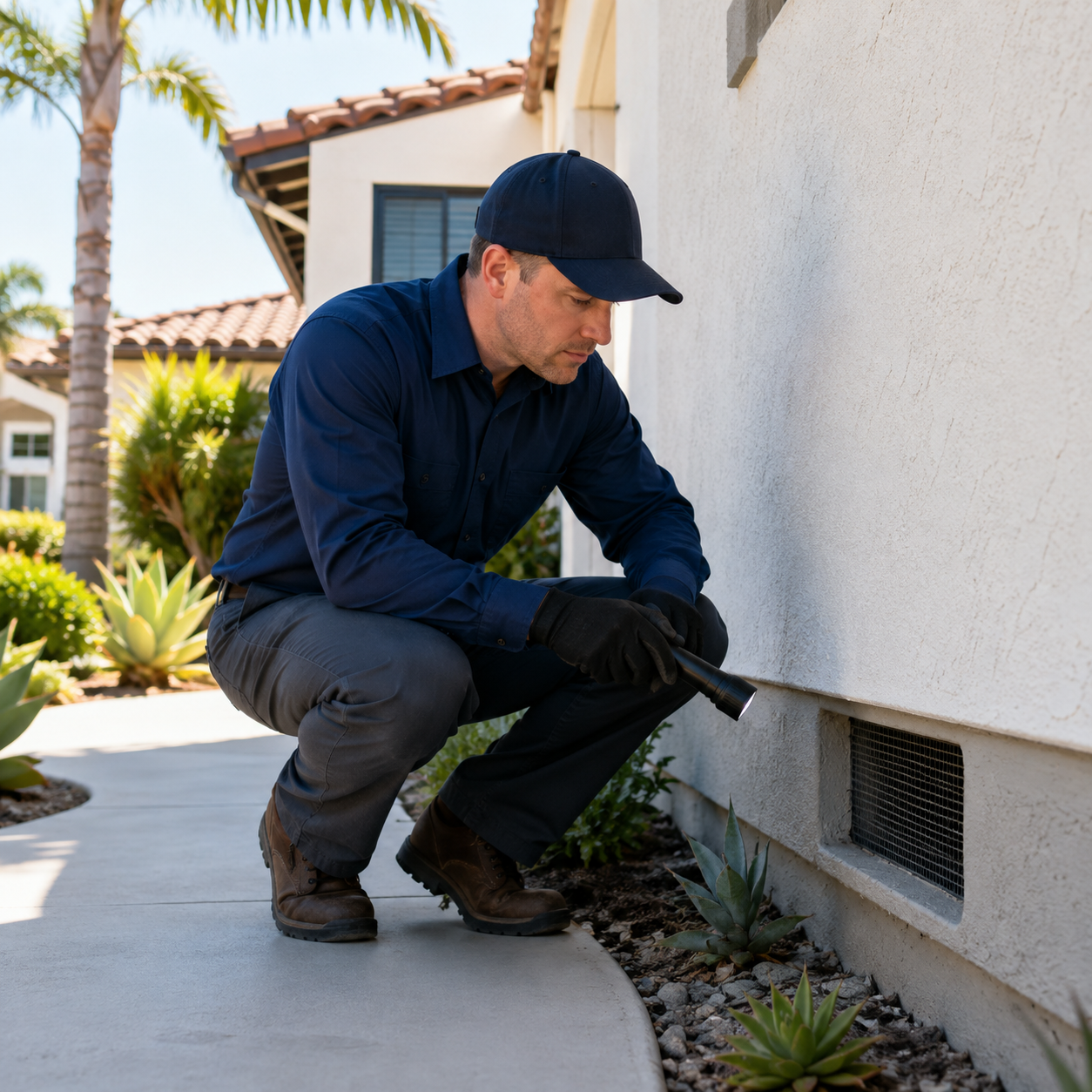
In California, only a licensed inspector can give an opinion on whether a home has wood-destroying organisms. State law requires the inspection behind a WDO report to be performed by a licensed Branch 3 field representative or operator working for a registered structural pest control company. That licensing requirement is what separates a WDO report from a line in a general home inspection.
That is the work we do at CVA Exterminators. Our WDO inspections are handled by licensed inspectors, including both of the company's owners, who still perform inspections personally. Our inspectors are paid an hourly wage along with a portion of the sale, and the hourly part matters more than it sounds. An inspector paid on commission alone earns little or nothing on an inspection that finds nothing, which is quiet pressure to find something. Ours are paid for the inspection either way. When we find nothing, our report says so and we tell you directly. We prepare reports for the full range of transactions: sale, purchase, refinance, escrow, FHA, and VA.
Our general pest control stays in the Santa Clarita Valley, where being close by is what lets us get to a customer quickly when something comes up. Termite and wood-destroying organism work is typically a one or two visit event, so we travel for it, across most of Los Angeles and Ventura counties. This is also work some companies do not take on. Wood-destroying organism work falls under a different license branch than general pest control, so not every pest company is licensed for it, and a WDO report is a regulated document that carries real responsibility. We have done it since 1998 and know how to do it right.
How long is a WDO report good for?
A WDO report reflects the home on the day it was inspected. Under California law, once four months have passed after the original inspection, we can no longer update it. That rules out a reinspection, a further inspection, or a supplemental report for additional findings, because a fresh look at the property counts as a brand-new inspection instead. Some lenders will still accept a report up to six months old, so those two timelines are worth keeping straight. It is usually best to schedule the inspection close to when you actually need the report, so it is still current when your contract or lender relies on it.
Get a WDO inspection you can trust
If you are buying, selling, or refinancing in Southern California and need a WDO inspection done right, we would like to help. You will get a licensed inspector, a report that says exactly what we found and where we found it, and honest guidance on what it means for your transaction. Request a WDO inspection with CVA Exterminators, and we will take it from there.