

If you just watched a cloud of winged insects collect at a sunlit window, a door frame, or the ground near your Santa Clarita home, take a breath. A termite swarm looks alarming, but the winged termites in front of you are not eating your home right now. They are trying to establish a colony, and it is that colony that eventually does the damage. The flight itself is usually over in anywhere from a few minutes to about an hour, though swarming can pick back up over the next several days, sometimes as long as a week, usually around the same time of day. What it tells you is that a mature termite colony is nearby, and that is worth a proper look. The most useful things you can do right now are simple: save a few of the insects, note exactly where you saw them, leave the walls alone, and get a licensed inspector out to confirm what you are dealing with. At CVA Exterminators, we have inspected Santa Clarita Valley homes for termites since 1998, and a swarm is one of the most common reasons homeowners call us. Termites are worth taking seriously.
What a termite swarm actually means
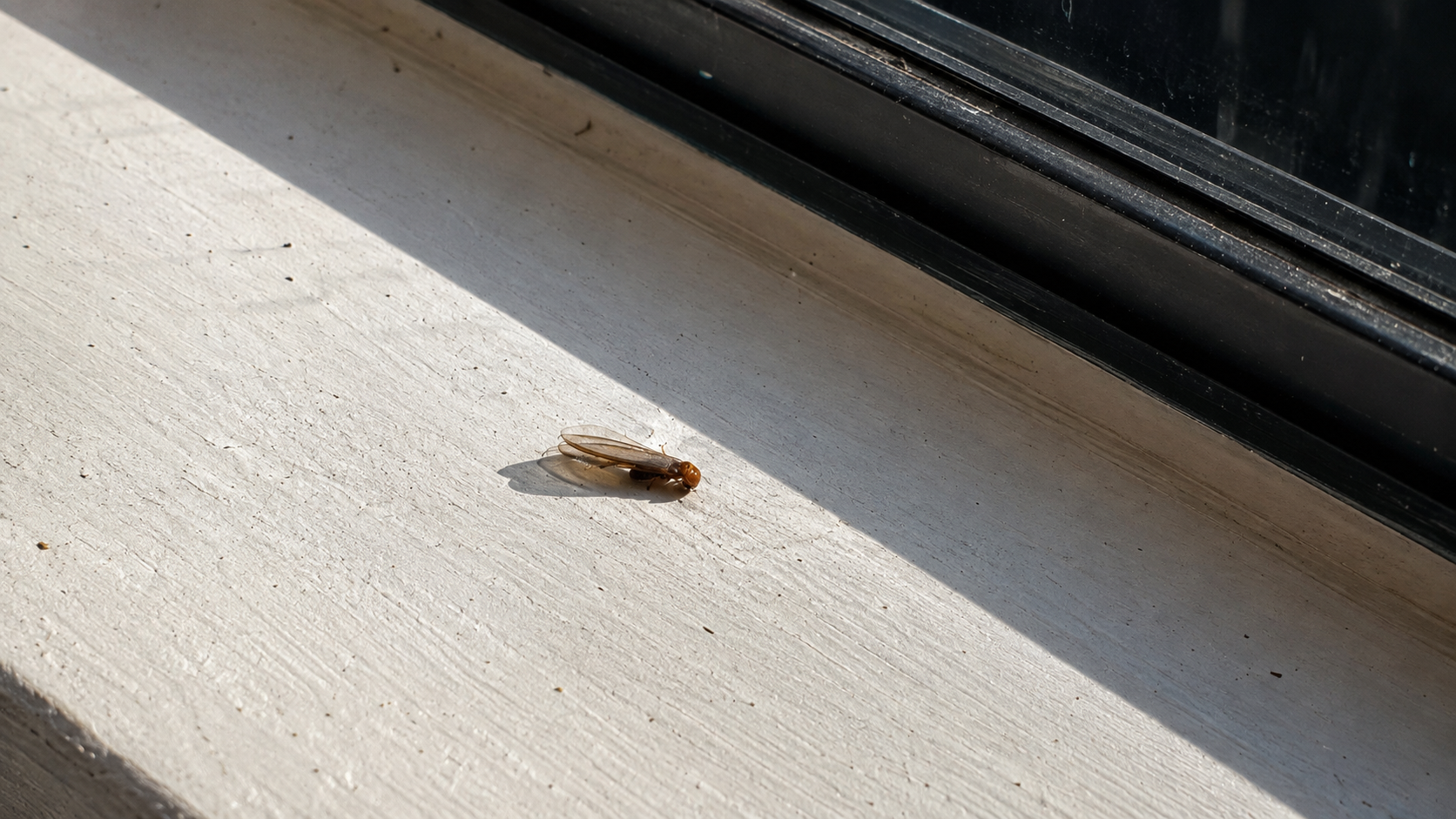
A swarm is the flight of winged reproductive termites, sometimes called alates or swarmers, leaving a mature colony to mate and try to start new colonies of their own. These reproductives are not the caste that chews through structural wood. That damage is done by the workers back in the colony, as NC State Extension explains. Swarmers do feed a little while they are looking to get a colony started, but not in any amount that matters to your house. What they are is a warning sign.
That warning matters most when the swarm is coming from inside the house or right at the base of the foundation. That points to a mature colony in or immediately next to the structure. A swarm out in the yard, rising from a stump, a woodpile, or landscape mulch, does not automatically mean your home is infested.
A few things are normal and worth knowing:
The flight is short, and the numbers depend on the species. Termite swarms tend to be smaller. Swarms can be very numerous. Either way it is over for the day fairly quickly, and a colony may swarm again over the following days, or in a later season.
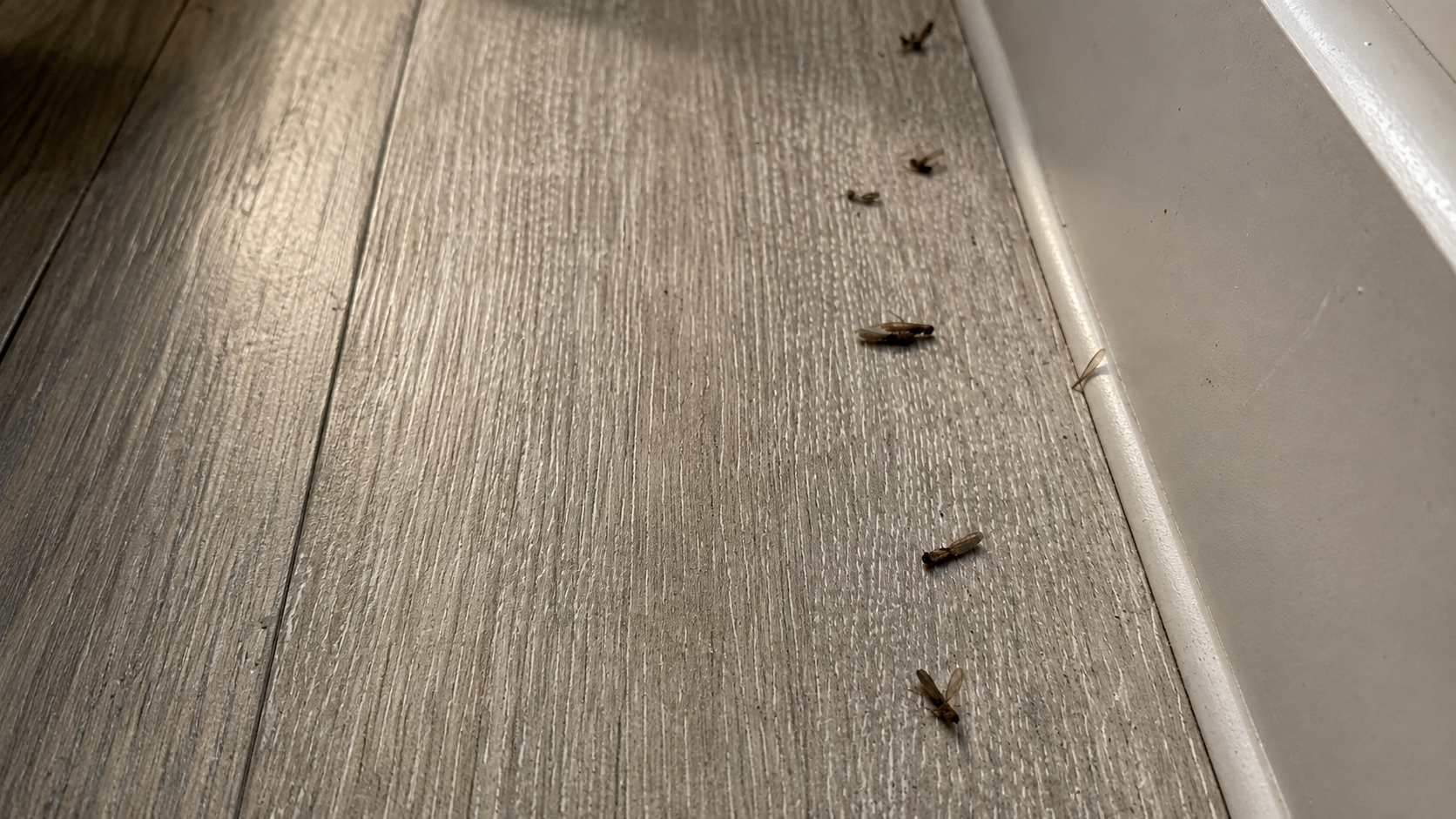
Swarmers head for light, so they gather at windows, doors, and vents. Swarmers that end up stuck indoors mostly die there, because they cannot get out and cannot find the moisture they need. Termite swarmers behave differently: if they cannot get out, they will try to start new colonies elsewhere inside the home.
Most swarmers never start a new colony, but that does not mean the colony they came from is gone.
What to do the moment you see a termite swarm
Here is the short list, in order.
Stay calm and take your time. Termites work slowly. California’s Structural Pest Control Board tells consumers that the extra day, week, or even month it takes to make an informed decision is usually insignificant against how slowly termites damage wood. Be wary of anyone using pressure, a limited-time “special,” or scare tactics to rush you into a contract.
Capture a few swarmers. Drop a handful into a jar or a sealed bag, or take a clear photo. Try to collect whole insects rather than just the shed wings, because the full body tells an inspector far more than a wing does. The species drives the whole plan, so a good sample makes the inspection faster and more accurate.
Write down exactly where you saw them. Which room or window, indoors or outdoors, and whether they seemed to come from the wall, the floor, or the foundation. Noting the spot gives the inspector a place to start.
Leave the walls and trim alone. It is tempting to pry at baseboards or open a wall to find the source. Resist it. Figuring out how far an infestation reaches takes experience and the right tools, and disturbing the structure can make a professional inspection harder.
Handle the swarmers you can see, and leave the wood and soil alone. Dealing with the insects in front of you is fine. Vacuum them up, or open a door or window and let them out. A basic household insect spray on the ones flying around is fine too. What matters is where nothing goes: not on wood, and not on soil. The products sold to consumers are contact materials, and most of them are repellent, so termites detect them and back away. That pushes the colony deeper into the structure and away from where it can be reached. Professional termite materials work the opposite way. Termites cannot detect them, so they travel through, pick the material up, and carry it back through the colony. A repellent product applied to wood or soil first can leave that later treatment much less effective. If you have already applied something, tell your inspector what it was and where you put it. It changes how the treatment is planned, and it is far better to know up front.
Get a licensed inspection. This is the step that tells you what is actually here and how far it reaches. A licensed inspector identifies the species, finds where the activity is, and lays out your options. Our termite swarmer inspections start with a free limited inspection of the area of concern, and we send licensed inspectors rather than commissioned salespeople. If we do not find anything in the area we look at, we will tell you so plainly. One distinction worth understanding: a free limited inspection is not a clearance. If nothing is found, nothing is noted, which is a different thing from a clearance or certification. Those come from the paid full comprehensive inspection.
How to tell which termite you are dealing with in Santa Clarita
Two kinds of termite account for most home invasions in our area: termites, which nest in the soil, and termites, which nest inside the wood itself. You often get a strong hint from when and how the swarm happened. This is a starting guess, not a diagnosis, and only an inspection confirms it.
If you want more detail on identifying what you found, we walk through it in our guide on how Santa Clarita residents recognize termite swarmers.
| What you noticed | Points toward subterranean termite swarmers | Points toward drywood termite swarmers |
|---|---|---|
| Season | Spring, especially a warm, sunny day after rain | Late summer through fall |
| Time of day | Frequently reported in the afternoon, though they can fly at other times | Any time of day, often noticed in the morning |
| Where they nest | In the soil, and beneath the structure in the crawl space or under slabs, keeping contact with moisture | Inside dry wood, above ground |
| Where they are common | Throughout California | Especially Southern California |
These cues come from the UC Statewide IPM Program, which notes that spring swarms on warm days after rain fit western termites, while late summer and fall flights fit drywood termites. Timing is only a hint, though. Either species can fly at almost any hour. Species matters because the two live in completely different places, so they need different treatment.
Termite treatment options after a swarm
Once an inspection confirms the species and where the activity is, those two facts decide the treatment. There is no single termite treatment that fits every situation, and any honest answer depends on what the inspection turns up.
For termites, the work targets the soil and the routes the colony uses to reach the home. That usually means treatment applied to the soil next to the structure, and underneath it as well, in the crawl space or beneath concrete slabs. After treating, we scrape off the mud tubes the termites travel through. We do not treat the tubes themselves. Removing them gives us a way to check our work, because tubes that get rebuilt later tell us the treatment has not taken hold. Tubes that reappear in the first days or even weeks are not a red flag on their own. The material has to move through the colony by way of the termites’ contact with one another, and that takes time.
One option you may read about elsewhere is in-ground bait systems. CVA does not offer them. They are used mainly in the eastern part of the country, and they are not a good fit for the subterranean species we deal with here in Southern California.
For termites, the choice is usually between a localized treatment and whole-structure tent fumigation. A localized, or spot, treatment addresses the specific area of activity the inspector identifies. It can be a good fit when the infestation is contained and reachable. It is not the same as treating the whole house, and it cannot account for activity elsewhere in the structure. Termites turning up in several parts of a home are usually separate colonies, each established in its own area, and treating one does nothing to the others. Whole-structure fumigation is the option when termite swarmers activity is widespread or hidden from view, because it reaches areas a spot treatment cannot. We cover the full range on our termite control page.
Because that spot-versus-tent decision is hard to make at the moment, our termite swarmers Satisfaction Assurance approach credits 40% of what you paid for a lower treatment toward full fumigation if you later decide to upgrade while still under warranty. If an inspection turns up existing damage, we can also walk you through termite damage repair options.
What to do if you see swarmers during a home sale or refinance
Swarmers have a way of showing up at the worst possible time, right in the middle of escrow. Here is how this actually works in California today, because there is a lot of outdated information floating around.
A wood-destroying organism inspection, commonly called a WDO or termite report, used to be a required part of the California real estate contract. It is not anymore. It is now a negotiable item, like a home inspection. Buyers are generally advised to have one done, and then the parties negotiate what work gets done and whether any credits change hands.
One piece worth understanding: if the report is submitted to escrow, the escrow company has to disclose it to the lender, and the lender may then require the noted work to be completed before it funds the loan. For that reason, many buying and selling agents handle the report outside of escrow. Among loan types, VA is the one most likely to require an inspection. Out-of-state lenders, usually online lenders who are not familiar with how California handles this, occasionally ask for a report as well. All of this describes California specifically, and the requirements are different in other states. Completed California reports are filed with the state and are searchable through the Structural Pest Control Board’s WDO report system.
CVA performs these inspections and reports for sale, purchase, refinance, escrow, FHA, and VA transactions, work that many larger companies avoid because of the liability involved. Our free limited inspection is a quick look at the area of concern, and it does not produce a clearance. The full comprehensive inspection is the one used for a sale. It covers the interior, exterior, attic, garage, and subarea, starts at $125, and is priced by home size, access, and construction type. Pricing is subject to change. You can see the details on our WDO inspection page.
Frequently asked questions about termite swarms
Do termite swarmers damage your home? Not in any way that matters. Swarmers are the winged reproductive termites, and while they do feed a little until a colony gets established, they are not the caste that works through structural wood. That damage is done by the workers in the colony. Seeing swarmers is a sign that a mature colony is nearby.
How long does a termite swarm last? The flight itself usually runs from a few minutes to about an hour. Swarming often continues over the next several days, sometimes up to a week, and it tends to happen around the same time each day. A colony can also swarm again in a later season, with those flights often smaller than the first.
Why are the termite swarmers gathering at my windows? They are drawn to light, so indoors they collect at windows and doors. Subterranean swarmers usually die there, because they cannot escape or find moisture, which is why you may find a pile of bodies or shed wings on the sill. Swarmers that cannot get out will instead try to start new colonies elsewhere in the home, which is a reason not to ignore them.
Should I spray the termite swarmers myself? Dealing with the swarmers in front of you is fine. Vacuum them up, open a door or window and let them out, or use a basic household insect spray on the ones flying around. The line to hold is that nothing goes on wood and nothing goes on soil. Store-bought products are repellent, so applying them to wood or soil pushes termites deeper into the structure and can leave a later professional treatment much less effective. If you have already applied something, tell your inspector what it was and where you put it. The step that actually addresses the source is a licensed inspection to identify the species and locate the activity.
Can you make the swarm stop? Honestly, no. Once the swarmers are on the launch pad, they are going to fly. Termite treatment is deliberately slow-acting, because the material needs time to move through the colony, so nothing we apply will shut down a swarm that is already underway. What you can do in the moment is vacuum the swarmers up, or open a door or window and let them out. A basic household insect spray will deal with the swarmers in front of you, but it does nothing about the workers back in the colony, and those are the ones causing the damage. Keep it to the insects you can see, though. Nothing goes on wood and nothing goes on soil, and if you have already applied something, tell your inspector what it was and where you put it.
Have swarmers at your Santa Clarita home? Let us take a look.

If winged termites have shown up in or around your home, we can help you find out what is going on. If there is nothing to worry about, we will tell you that too. We have served the Santa Clarita Valley since 1998, and we know how termites behave here through the seasons. For termite and wood-destroying organism work we travel farther than we do for pest control, covering much of Los Angeles County and Ventura County. CVA Exterminators is licensed by the California Structural Pest Control Board (Registration #PR4456). Contact us to schedule your inspection.