

Pest Control for a New Home in Santa Clarita
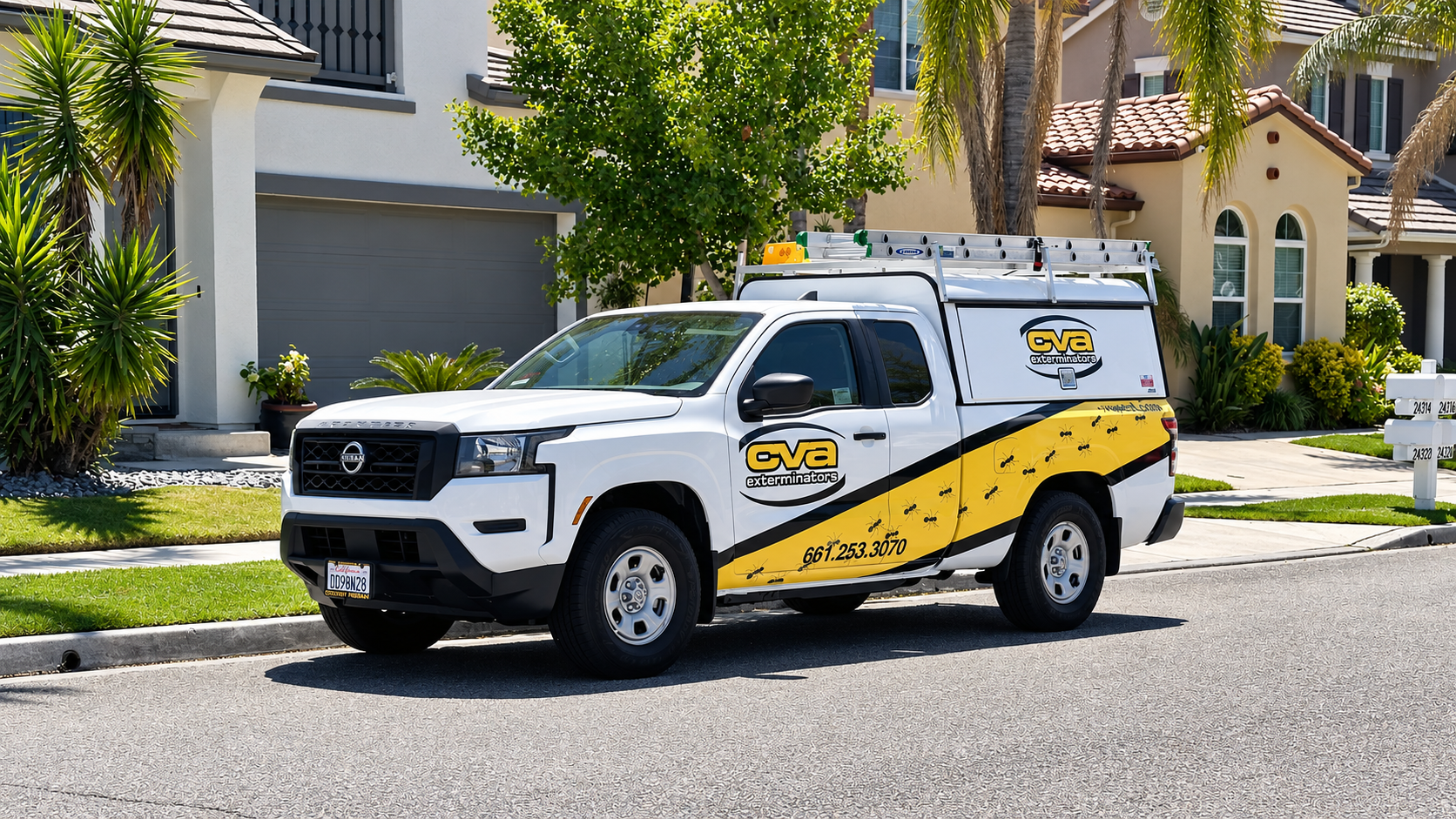
Moving into a home in the Santa Clarita Valley is the best time to get ahead of pests, while the rooms are still empty and nothing is covering the spots where a problem would start. The move-in plan is straightforward. While the house is empty, look it over and correct the conditions that draw pests. During the sale, collect the home's pest and termite paperwork. Then set up ongoing coverage soon after you move in, so activity gets caught early instead of turning into a bigger problem later.
We have served Santa Clarita Valley homeowners since 1998, and new movers are some of our most common calls. Newer construction and older homes each come with their own conditions to check, and the move-in window is when you have both the access and the timing to deal with them.
When should you schedule pest control for a new home?
There is no fixed number of days before move-in when a house has to be treated. What matters more is using the empty-home window and having coverage in place around the time you move in. An empty house gives the clearest access to closets, cabinets, wall edges, and utility penetrations, all of which get harder to reach once furniture and boxes are in place. University of California IPM guidance calls a property turnover an ideal time to pest-proof a home, because that is when you can seal and correct the conditions pests use.
A useful first visit checks the home, identifies any activity, and treats where it is warranted, rather than spraying everywhere by default. For the pests most new homeowners run into, like ants and spiders, we treat on the first visit rather than making you wait for a separate appointment. For rodents and termites, we start with an inspection, because those problems need to be identified and scoped before any work. When there is a lot of activity inside, the interior is treated on that first visit. After that, most of the work shifts to the exterior, which keeps treatment out of your living space while still reducing what tries to get in.
What to check and seal before the boxes arrive
Before you move furniture in, walk the house and yard and correct the things pests use to get inside and stay: food, water, shelter, and points of entry. Most of this is simple, and doing it while the house is empty is far easier than doing it later.
Seal visible gaps and cracks on the exterior, especially around pipes, utility lines, and vents, and where two different materials meet.
Repair leaking faucets or plumbing and clear any standing water, since moisture draws a wide range of pests.
Check that doors and windows close tightly, and look at the weatherstripping and door sweeps.
Keep plants, grass, and mulch pulled back from the foundation. UC IPM recommends a setback of at least one foot for ant control. Skip edible plants against the perimeter entirely. Vegetables, herbs, and fruit right up against the house create a condition that makes an ant problem much harder to deal with later.
Store food and pet food in sealed containers, and keep trash containers clean and closed.
Reduce clutter in the garage, attic, and storage areas, which give pests places to hide.
Thoroughly inspect any second-hand or stored furniture before you bring it inside, as this is one of the most common ways pests get into a home. Cardboard boxes can hold silverfish, and anything that has sat in storage for a while can hold spiders.
None of these steps will keep every pest out on their own, but together they make the home less inviting and give a first treatment a head start.
What to ask about the home's pest history
Ask for the home's written paper trail. Records tell you far more than a seller's memory does, so gather the documents rather than relying on a verbal answer to "has it ever had termites?"
In California, you can start with the state's own record, as long as you know what it does and does not cover. The Structural Pest Control Board keeps a public property search where you can see whether a wood-destroying organism inspection report was filed for an address in the past two years, because licensed companies are required to report those inspections. Two limits worth knowing:
It covers wood-destroying organisms only. The state does not keep general pest control records by individual home address, so this search will tell you nothing about past ant, cockroach, or rodent service.
It shows that a report was filed, not what the report said or which company filed it. If you see several records inside that two-year window, it is worth requesting copies. The Board explains how on its termite inspection information page.
Check there first, then ask the seller and agent for what they have on file:
Any wood-destroying organism (WDO) inspection reports, along with supplemental or reinspection reports.
Any certification, work-completion notice, invoice, or warranty tied to termite or pest work.
Records of past rodent or general pest activity, where it happened, and any sealing or exclusion work done.
Any history of leaks, drainage problems, or water damage, and the repairs that followed.
Do not assume the standard seller disclosure answers all of this. Disclosures are useful, but they are not a substitute for asking for the records and, when it makes sense, ordering your own inspection.
Common pests in new construction vs older Santa Clarita homes
A brand-new home can still have pest problems, and an older home is not automatically infested. What differs is the set of conditions each one tends to have. Here is how the two compare for a Santa Clarita Valley buyer.
| What to consider | Newer construction (Valencia, Stevenson Ranch, Westridge) | Older SCV homes (Newhall, Canyon Country, Saugus) |
|---|---|---|
| Why pests show up | Clearing land during construction disturbs whatever was already living there, including established colonies such as carpenter ants, fire ants, and rodents, and pushes them toward the new structure. Fresh landscaping and new irrigation create moist soil and plantings against the house. | Years of settling can open gaps around pipes and utilities, wear down door seals, and leave past leaks, moisture, or cluttered voids that pests use. |
| What to look at first | New landscaping, irrigation lines, grading, and the exterior perimeter. | Remodeled or repaired penetrations, doors and windows, the crawl space and attic where you can reach them, and any plumbing or moisture issues. |
| Pests to watch | Ants (Argentine ants are the most common around California homes), the occasional carpenter ant from cleared land, and general crawling insects. | Ants, cockroaches, rodents finding older openings, and termites, both drywood and subterranean. |
Age alone does not decide it. A well-sealed older home can have fewer of these conditions than a poorly sealed new one, so use these as a starting point for what to inspect rather than a prediction.
One thing many Santa Clarita homes share is a location near open space and brush. If your property backs up to open land, pay extra attention to the exterior: the perimeter, the garage, utility openings, storage areas, and any vegetation touching the house. That edge is where rodents and other pests tend to travel.
Why start year-round coverage from day one?
Starting coverage when you move in means a professional is watching the home and can respond to activity early, instead of you waiting until a problem is large and takes more work to bring under control.
Year-round coverage here means ongoing attention and prompt response, not spraying on a set calendar no matter what the house needs. That is the idea behind Integrated Pest Management, which the California Department of Pesticide Regulation describes as inspecting regularly and acting early rather than reacting after a problem takes hold. It also fits how our service works.
Our Premium Three Zone Pest Service covers three areas of the property: the yard next to the home, the perimeter, and the interior as needed. It runs year-round, billed monthly, with visits scheduled quarterly or every other month. If a covered pest shows up between visits, you call and we come back at no additional charge. We rotate materials through the seasons and dust spider webs from the entry, accessible eaves, and outdoor living areas. When rain is in the forecast, we switch to slow-release granules on the soil, where pests travel when wet weather pushes them toward the house. Plans start at $42 per month (pricing subject to change). You can read more on our residential pest control page.
A plan controls and reduces pest activity. It is not a promise that you will never see a pest, and results depend on conditions like food sources and shelter around the property.
If you are not ready for a plan, our one-time service starts at $195 (pricing subject to change), comes with a 30-day warranty, and includes a year of discounted booster visits afterward at a schedule you set. It is the option for buyers who would rather pay per visit.
What to look for when choosing a pest control company
A few things are worth checking before you sign up with any company, especially as a new homeowner:
How long the warranty runs and what it covers. Some companies only cover return visits free within 30 days of the last treatment and charge after that, so ask whether between-visit callbacks are covered year-round.
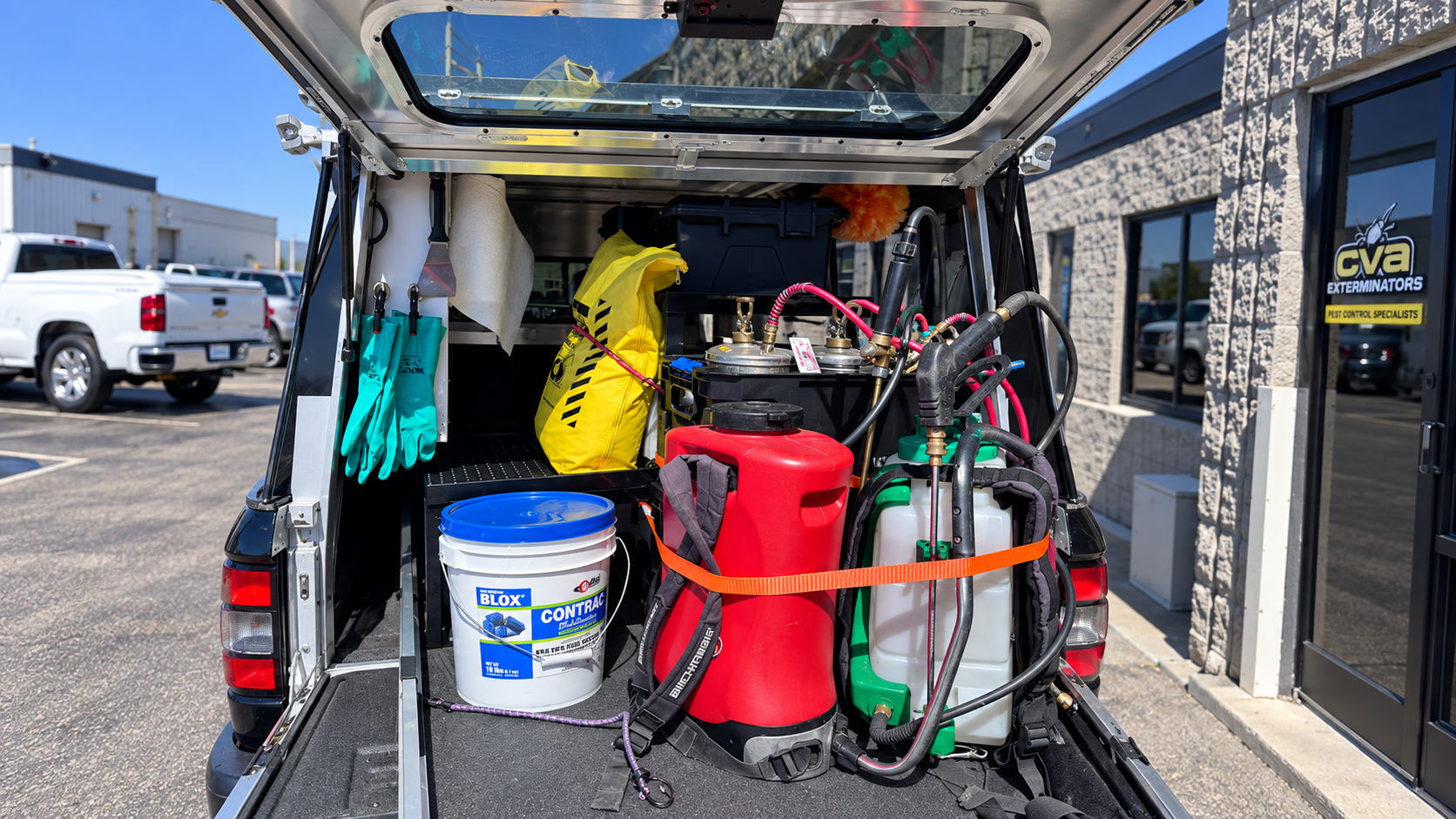
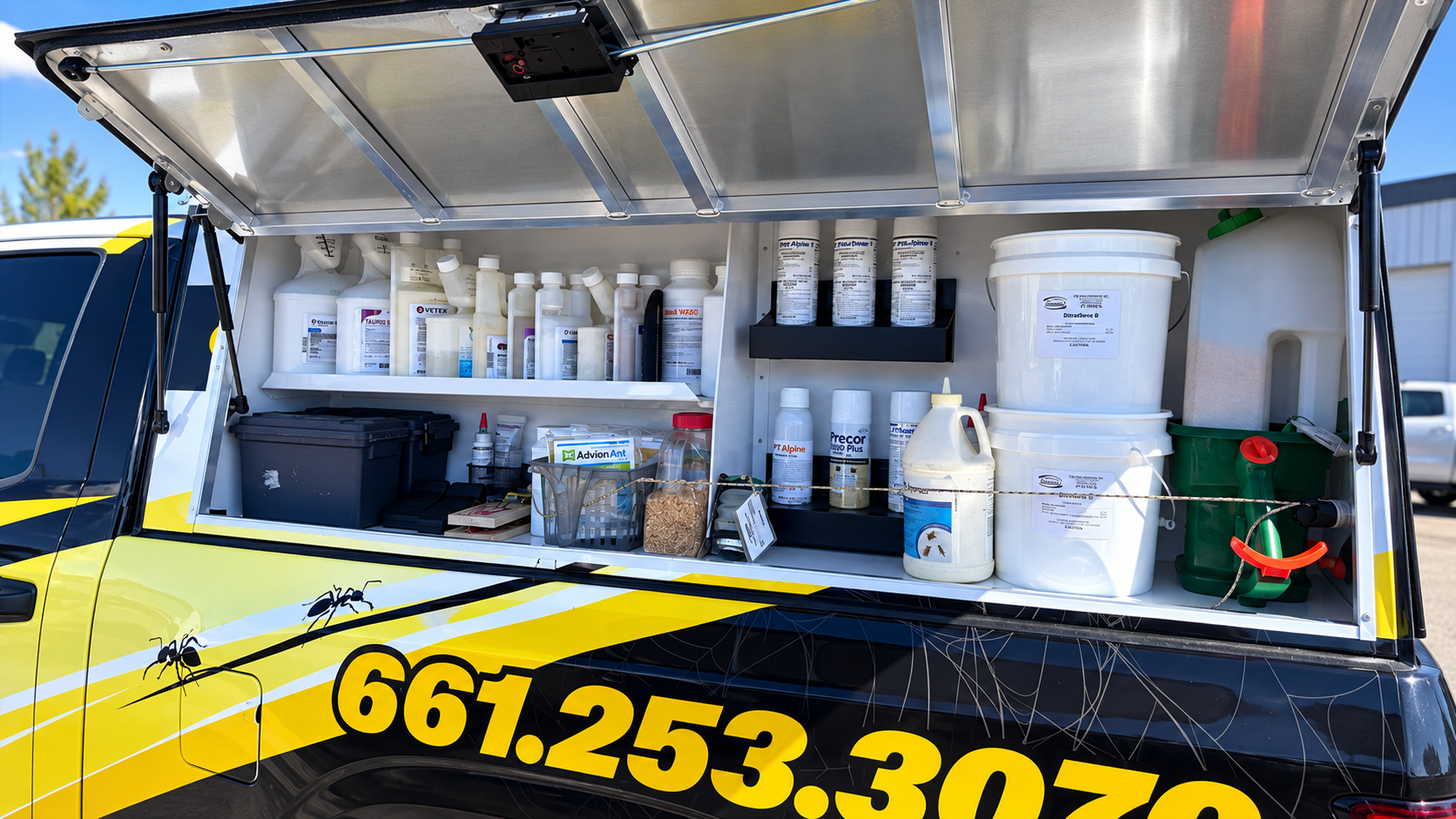
How well equipped the service vehicles are. Ask whether the truck carries one large spray rig or several different types of application equipment. A single tank and hose reel means every property gets handled with one or two materials. A vehicle carrying several tools and a range of products for the pests that actually turn up in Santa Clarita is what lets a technician treat what they find during the visit instead of scheduling a return. A shell on the truck is a reasonable tell, since it usually means there is enough equipment to be worth enclosing, and it keeps materials and equipment locked up rather than riding in an open bed. Our trucks carry several application tools and a stocked range of products for the pests common here.
Whether the company is truly local. Ask where the office is and where the service teams are based, and whether they stay in the Santa Clarita Valley. When you call, are you talking to someone here, or to a call center somewhere far away? Our general pest control service stays in the SCV, and we run into our customers at the grocery store, at restaurants, and out walking our dogs. That tends to make a company care how the last visit went. Someone in another city, or another country, may not feel the same way.
How the company gets its customers. A good local reputation, real reviews, and word of mouth are one route. Seasonal door-to-door sales are another. Doing this research before you move in is worth the half hour, because sooner or later someone will knock and point at the ant trail or the spider webs you have been meaning to deal with, and it is much easier to say no when you already know who you want to call. It also helps to know who you are talking to at the door. In California, structural pest control work has to be performed by a licensed company, and a person soliciting on behalf of a registered company does not have to be licensed to introduce that company or set an appointment. Identifying your pest, inspecting the property, or quoting a price beyond what is printed on the company's literature is licensed work. Ask what the person at your door is licensed to do, and look the company up through the Structural Pest Control Board and check reviews before you sign anything.
How the inspector is paid. Ask the question directly. At some companies an inspector is paid only when they find something and sell the work that follows, which is a different set of incentives than paying someone for the inspection itself. Our inspectors are paid for the inspection whether they find anything or not. Some also earn a portion of work that gets completed, and we would rather tell you how it works than have you wonder.
How the move-in period connects to a termite or WDO inspection
A termite or wood-destroying organism (WDO) inspection is tied to your purchase timeline more than your moving date, but the move-in stretch is a sensible time to have any termite questions settled, ideally before furniture is in the way. Coordinate it early enough in your contract's investigation period for the results to matter.
In California, a termite inspection is not automatically required to close a sale. It is a negotiable item, and buyers commonly order one the way they order a home inspection. If you are financing, check your loan's requirements early. VA loans are the type most likely to call for an inspection, and for a VA loan in California, wood-destroying-insect information is required statewide. We also sometimes see out-of-state or online lenders ask for a report because they are less familiar with how California handles this. Requirements differ in other states, so this describes California specifically.
One thing buyers often do not realize: you do not have to use the inspector your agent suggests. Most agents refer companies they trust, and most of those referrals are perfectly good. It is still your inspection and your purchase, so look the company up before you agree to it, and ask to choose your own if you would rather. Getting a second opinion usually does not mean paying twice, either. We provide free competitive bids, and you are welcome to call us and ask how that works. A home is the largest purchase most people ever make, and a second look sometimes turns up more than the first one did. That is the value of it. Better to know about a condition while you can still negotiate it than to find it after closing, when the repair is yours.
It helps to know the difference between a report and a clearance. An inspection report records what the inspector looked at and found. When an inspection finds nothing, that is noted on the report, but a report with no findings is not a clearance. A clearance, sometimes called a certification, is not a separate document at all. It is a specific set of wording that appears on a report or on a notice of work completed, and it follows a full comprehensive inspection and, where work was needed, the completion of that work. You can request a clearance on a full inspection, but a free limited or spot inspection does not produce one. If a report or certification comes up during your purchase, our post on buying a home without termite certification walks through what those documents mean.
We handle both kinds of inspection. Our free limited or spot inspection looks at the area of concern plus parts of the inside and outside of the home, at no charge, and does not produce a clearance. Our full comprehensive inspection, the kind used for a home sale, covers the interior, exterior, attic, garage, and subarea (crawl space) where present, and starts at $125 (pricing subject to change), priced by factors like home size, access, and construction type. Our inspectors are licensed and have been doing this a long time, and if an inspection turns up nothing, the report says so and we tell you directly. You can learn more on our WDO inspections page or our termite control page.
One note on service area. Our general pest control plans serve the Santa Clarita Valley, while our termite and WDO work travels across most of Los Angeles and Ventura counties.
Get your new Santa Clarita home covered
Getting settled into a new home in the Santa Clarita Valley? We are happy to walk your property, answer your questions, and set up coverage that fits the house you just bought. Call us at (661) 765-8938 or reach out through our contact page, and we will take it from there.