
By CVA Exterminators, Inc.
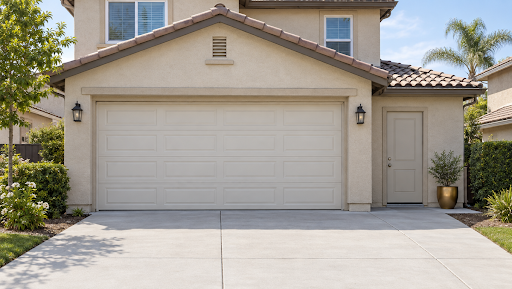
At CVA Exterminators, Inc., the top places we find rats getting into a garage are the rubber seal along the bottom of the main garage door and the gap under the pedestrian door, the walk-in door at the side of the garage. We've served the Santa Clarita Valley since 1998.
Start with those two gaps, and close them with something rodents can't chew through. Rodents chew through rubber, foam and plastic, so a gap stays closed only when it's sealed with something like steel mesh, retrofit vent screens or a door seal with a metal component, like stainless steel strands, built into it.
Where do rodents get into a garage?
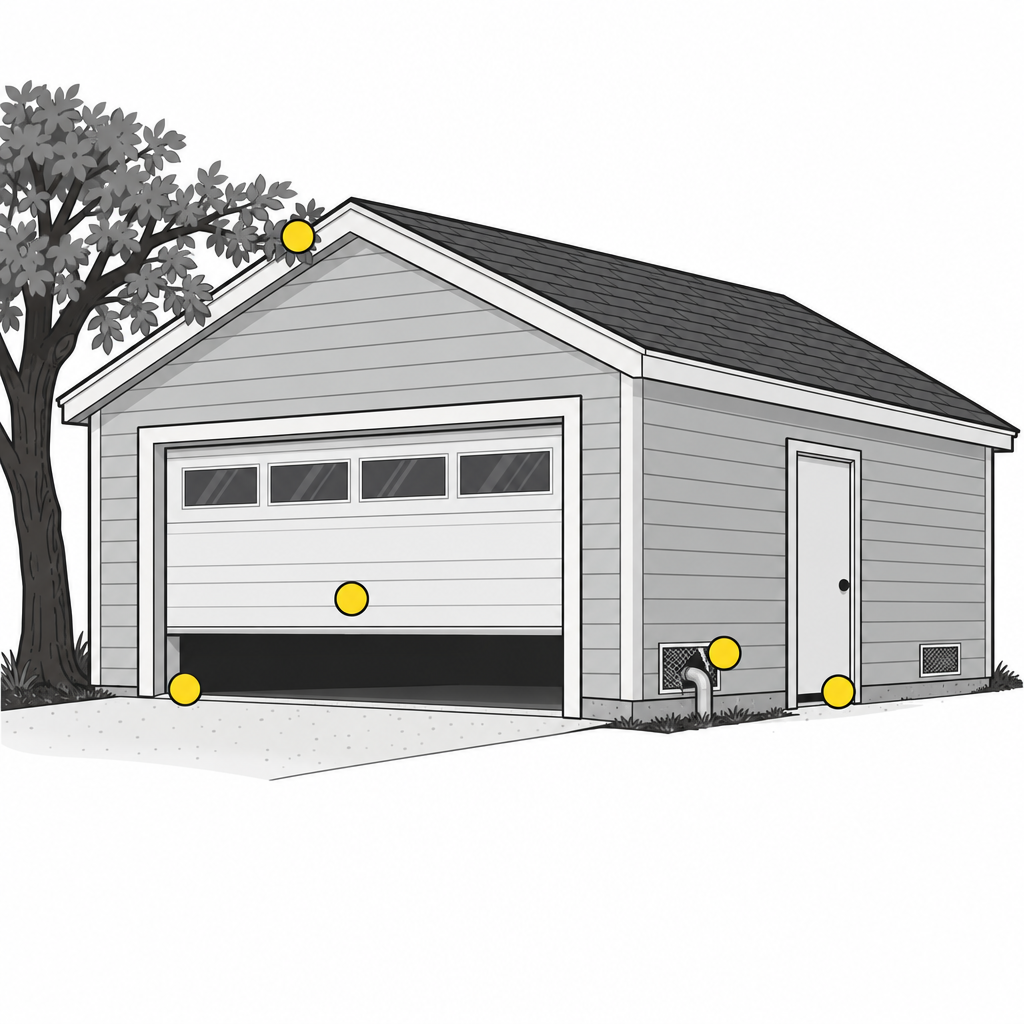
The two doors are where we most often find rats getting in, but rodents use a few other ways too. These are the five we see:
The bottom seal of the main garage door
The gap under the pedestrian door
Damaged screen vents in the garage walls
Trees close to the roof
A garage door left open, especially around dusk
How small a gap can a rat or mouse get through?
A mouse can squeeze under a gap only 1/4 inch tall, according to the University of California's Integrated Pest Management program (UC IPM). A rat needs only a little more room: UC IPM says rats, especially young ones, can squeeze beneath a door with a 1/2-inch gap.

How to check your garage for gaps
The simplest way to find gaps is a daylight test. Do it even if you haven't seen signs of rodents, because rats show up anywhere in the valley. In our experience, homes next to green belts seem to have more of them.
Go into the garage during the day and close the doors. Close the main garage door and the pedestrian door, and turn off the lights.
Look for light coming in. Check along the bottom of the main door, especially at the corners, and under the pedestrian door. If you see light under a door, you have a gap that rodents can use to get into the garage, and from there into the house.
Check the wall vents. The daylight test won't always show a vent problem, so look at each screen. You're looking for a screen that's been cut, or a pipe or cable that's been run through it.
Look where pipes, wires and cables come through the walls. Check for gaps around these penetrations as well as old holes. Lines that were taken out years ago often leave an opening behind.
Look for signs that rodents are already using the garage. Droppings, grease stains, gnawed edges on the door seal and chewed boxes all mean they've found a way in.
Why the rubber garage door seal fails, and what holds up
The rubber seal along the bottom of a garage door can be chewed through. Look along the seal's whole length for chewed spots, and look closely at any corner where the daylight test showed light.
Light at a corner doesn't always mean the seal is chewed. The door itself may be hung unevenly, the floor could be uneven, or the seal may have been cut too short, leaving a gap on one side. A door that's hung unevenly is a job for a garage door company.
When a seal needs replacing, we replace it with one that has stainless steel fibers embedded in the bottom. If a rat tries to chew through it, the fibers cut its mouth, so these seals are very rodent resistant. If you replace the seal yourself with another plain rubber one, rats can chew through the new seal the same way they chewed through the old one. If you'd rather not take it on, we can look at the seal as part of an inspection.
The pedestrian door is an easier fix you may be able to handle yourself:
Add a door sweep. A sweep across the bottom of the door closes the gap between the door and the threshold. The UC Cooperative Extension recommends a door sweep, not a weather strip, to keep rodents out. Weather stripping is soft enough for rats to gnaw through. UC IPM notes that rats can chew through plastic, foam and wood, so avoid a sweep made of those. We install rodent-resistant door sweeps with stainless steel strands embedded in the rubber along the bottom. They work best where the gap under the door is larger, so a bigger gap is a good reason to call us.
Check the bottom of a wood door for gnaw marks. UC IPM notes that a rat might gnaw a wooden door to make the gap under it bigger.
Repeat the daylight test. After you replace a seal or add a sweep, close up the garage again and make sure no light gets through.
What to seal garage vents and pipe holes with
Use metal or concrete for pipe holes, because rodents chew through softer materials. That includes expanding foam, which many how-to guides recommend for this job. UC IPM says foam is ineffective for plugging the holes mice use, and rats chew through it.
Garage wall vents often have a gap cut into their screen. When someone runs a sprinkler line, cable TV or other wiring or plumbing through a garage wall, they often cut through the vent screen to do it. The gap left around the line is big enough for a rodent to get through.
For rodents, 1/4-inch hardware cloth is the right size. Finer mesh, like 1/8-inch, is meant for keeping out insects, and solid sheet metal would block the airflow a garage vent is there for, so neither belongs on a garage vent. This is how the common options compare:
| Material | Does it keep rodents out? |
|---|---|
| Galvanized 1/4-inch hardware cloth (stiff wire mesh) | Yes, in the 1/4-inch size. Wider mesh, like 1/2-inch, can let rodents through. Use it to rescreen vents and cover larger openings. |
| Sheet metal | Yes. Use it to patch holes around pipes. |
| Coarse steel wool or copper wool | For a while. Pack it into small holes and cracks. UC IPM says steel wool pads make good temporary plugs but may rust over time. Copper wool, sold by online retailers, won't rust or stain, though it may darken over time. |
| Concrete, mortar or stucco patch | Yes. Use it around pipes that come through a foundation, masonry or stucco wall. |
| Chicken wire | No. UC IPM says rats can pass through the openings. |
| Expanding foam on its own | No. Rodents chew through it. The CDC says it can be used over steel wool to hold the steel wool in place. |
| Rubber, vinyl or plastic screening | No. Rodents chew through them. |
| Wood | No. Rodents chew through it. |
For vent screens, the Los Angeles County Department of Public Health recommends 1/4-inch galvanized hardware cloth. Where a line runs through a vent, replace the cut screen with a retrofit vent screen instead of leaving it in place.
How rodents get from the garage into the house
A rodent that gets into an attached garage can keep going into the house, so the wall between the two needs the same attention as the outside walls. Two spots matter most:
The door from the garage into the house. Check the bottom of this door for a gap. A door sweep can close it, the same as on the pedestrian door.
Holes through the shared wall. Look where electrical, plumbing, cable and gas lines pass from the garage into the house. The CDC lists the holes around these lines as places to seal, using the same materials in the table.
Do trees near the roof let rats into the garage?
Rats can use a tree to reach the roof, and from the roof they can get inside through openings up high, such as attic vents and gaps at the eaves. That's mainly a roof rat problem. Roof rats are a kind of rat that climbs well and often nests up high, in trees or attics. Because they climb, UC IPM says openings above ground level need sealing as well as the ones near the floor.
In our experience, a tree that touches the home or has limbs within 3 to 6 feet of the roof is close enough for rats to jump across. UC IPM and LA County Public Health recommend keeping limbs at least 6 feet from the roof. Trimming limbs back that far takes them past the 3 to 6 feet rats can jump. Trimming is something you can do yourself or hire a tree service for. Gaps on the roof itself are harder to find and reach, and that's one of the times it makes sense to call us.
What in your garage attracts rodents?
Rodents stay in a garage that gives them food and places to hide. Clearing out both makes the garage much less appealing, even before every gap is sealed:
Store pet food and birdseed in metal containers with tight-fitting lids. LA County Public Health recommends metal for pet food and birdseed kept in a garage. UC IPM notes that rats can chew through plastic.
Don't leave pet food out overnight. A bowl left on the garage floor is an easy meal.
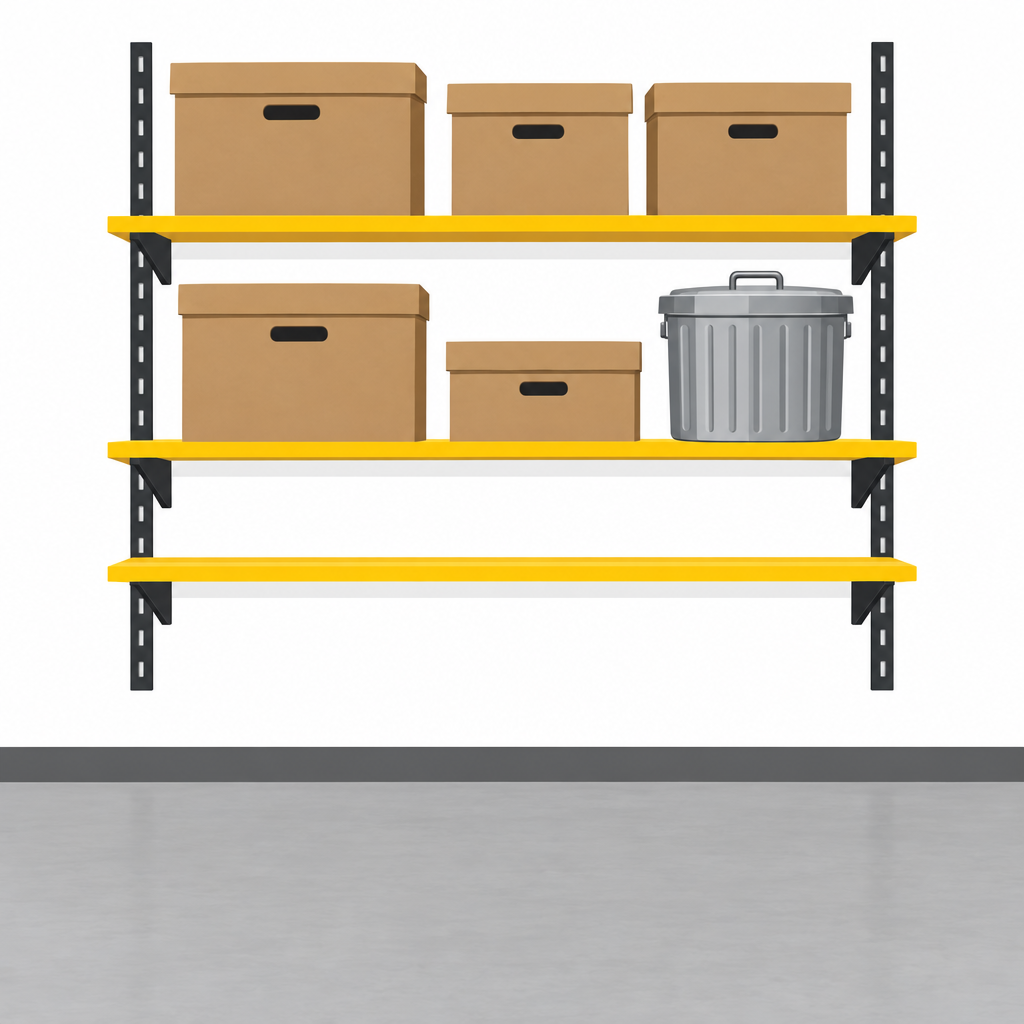
Get boxes off the floor. UC IPM notes that rodents nest behind boxes and in drawers in the garage. LA County recommends keeping stored items in the garage organized and elevated.
Keep clutter to a minimum. Piles of stored things give rodents places to hide and nest.
Rodents that nest in a garage can also damage a parked car. UC IPM notes that house mice can cause damage to structures and vehicles by gnawing on electrical wires and gas lines, and in our experience rats do this more often than mice.
Does leaving the garage door open let rats in?
An open garage door is an easy way in for a rat, especially around dusk. In our experience, dusk is when rats start moving around for the night. UC IPM says rats are mostly active at night. If you're working in the garage in the evening, close the door before it gets dark.
Why seal your garage before winter?
Sealing the garage matters most heading into winter, because when the weather turns rainy and cold, rodents want to stay dry too. UC IPM notes that where there are house mice living outside, they often move indoors in autumn as nights get colder.
Found droppings? How to clean them up
Don't sweep or vacuum rodent droppings or urine. According to the CDC, sweeping or vacuuming can put tiny droplets containing viruses into the air. The CDC recommends wetting the droppings down and wiping them up instead:
Open all doors and windows for 30 minutes before you start, and leave the area while it airs out.
Put on rubber or plastic gloves.
Spray the droppings and urine until they're very wet. Use an EPA-registered disinfectant, or a bleach solution of 1.5 cups of household bleach in 1 gallon of water.
Let it soak for 5 minutes, or as long as the disinfectant label says.
Wipe it up with paper towels and throw them in a covered garbage can.
Mop or sponge the area with a disinfectant.
Wash your gloved hands, then wash your hands again with soap and warm water after you take the gloves off.
When should you call a pest control professional?
Some rodent problems go past what sealing the garage doors and vents can fix. These are the situations where we'd recommend calling:
Rodents are already in the house or the attic. Scratching in the walls or ceiling is a common sign.
The gap is on the roof, or somewhere else you can't reach.
You've done the daylight test and checked the vents and pipes, and you still can't find how they're getting in.
Droppings keep showing up after you've sealed the gaps you found.
Traps catch rodents that are already inside, but more can keep coming in while a gap is open. UC IPM reports that no repellent has solved a rat problem for more than a very short time.
For rodents, we start with an inspection. We check the inside of the home, the attic and the outside, and give you a written report showing where rodents are getting in. Then we seal the gaps, which can include repairing damaged vent screens and sealing around doors and the places where pipes come through the walls. You can read more about how we handle rats on our rodent control page, and about mice on our mouse control page.
Sealing lowers the chance of rodents getting back in, but no one can promise none ever will. Food and places to hide around your property also affect whether rats move in, so keeping clutter to a minimum is key to lowering that chance. Rats sometimes get into a home through the sewer lines too, and when that happens, a plumber may need to be involved.
If you'd like us to take a look at your garage, give us a call at (661) 253-3070, email us at mail@cvaexterminators.com, or reach us through our contact page. Our office is open Monday through Friday, 8:00 a.m. to 5:00 p.m., and we serve homes across the Santa Clarita Valley.